
Why did anyone think Trump’s tariffs would be popular?
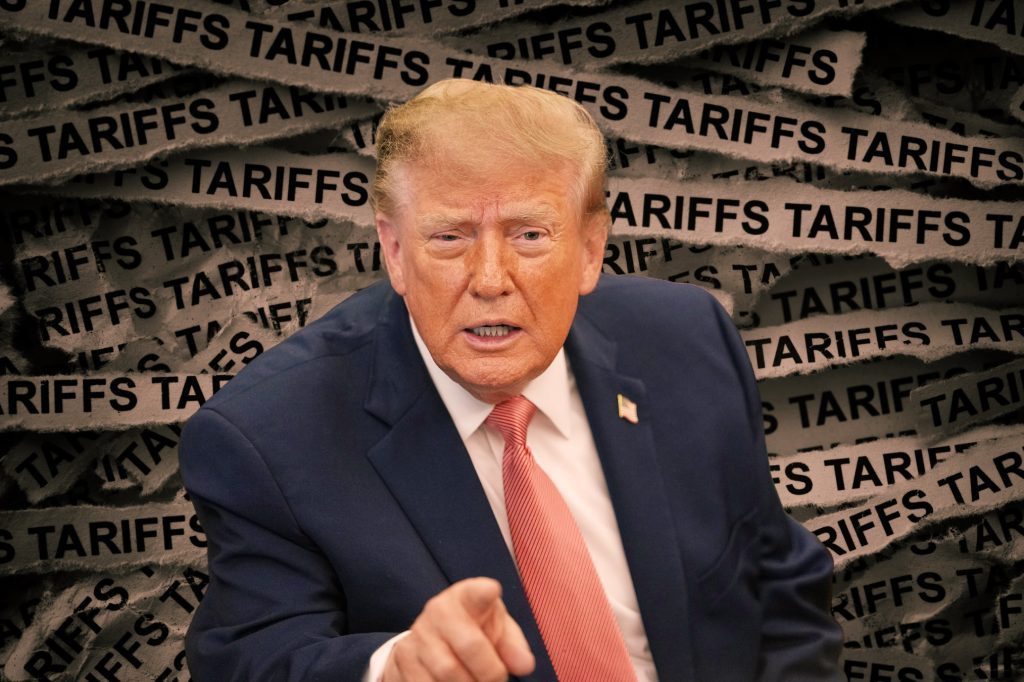
I can pinpoint the exact moment that I fell in love with Wisconsin. I had always had a distant regard for that lake-ringed state. I had applauded its pioneering reforms on school choice, welfare and the right to work. I had admired the Republican politicians which it supplied so disproportionately: Tommy Thompson, Paul Ryan, Reince […]
Across the American heartland, voters are waking up to a harsh economic reality: the price of populism is coming straight out of their own wallets.
THE WISCONSIN WARNING SIGN
In the lake-ringed state of Wisconsin—a place long synonymous with conservative reform—the frustration is palpable and aggressive. A single billboard greeting travelers near Milwaukee perfectly captures the mood: "What’s worse than Chicago? Tariffs."
This isn't just one disgruntled sign; it reflects a deep, ground-level resentment from Wisconsin to Michigan. Business owners who rely on cross-border trade are reeling, and voters are beginning to punish Republican candidates who fail to stand up to the current trade regime.
THE FALLACY OF THE POPULIST PROMISE
While the establishment elite doubled down on trade wars, they ignored the cold, hard numbers. Recent polling reveals a staggering shift: Democrats are now polling significantly higher than Republicans on trade, the cost of living, and protecting the interests of the American worker.
The Trump-era trade policy was sold as a championing of the blue-collar base, but the data suggests a different story. Voters are quietly and steadfastly rejecting a policy that has failed to deliver reshoring or revenue, instead opting for higher prices and supply chain chaos.
A GLOBAL LEADERSHIP SELF-DESTRUCT
Beyond the domestic price hikes, the real casualty of these trade wars is America’s standing on the world stage. By alienating allies and abandoning the mantle of a reliable partner, the U.S. has left a vacuum for new, global supply chains to emerge without us.
The nation remains wealthy, but we are undeniably weaker for it. The obsession with closing trade deficits—a concept often misunderstood by those in power—has led to a disastrous cycle of economic self-sabotage that experts say has made the country poorer than it needed to be.
THE SPECTACLE OF THE FAILED POLICY
Despite all the noise, the trade balance remains largely unchanged. Imports have simply shifted from China to other nations, and the goods deficit has ballooned to record levels. It is, by every standard measurement, a policy failure.
Politicians often scramble to rewrite history when their schemes collapse. Soon enough, the same people who cheered for these radical trade shifts will likely pretend they never supported them at all, as the economic reality continues to defy the rhetoric.
FAITH LENS
Proverbs 11:1 warns that "a false balance is an abomination to the Lord, but a just weight is his delight." True prosperity is built upon honest dealing and sound stewardship, not on economic manipulation that burdens the hardworking neighbor. We must pray for leaders who prioritize the common good over political obsession, seeking wisdom that values integrity over partisan gamesmanship.
"Then you will know the truth, and the truth will set you free."
— John 8:32